Ketotifen 1mg tablets are prescription antihistamine and mast cell stabiliser tablets used to help prevent and control allergic symptoms and, in some cases, mast cell activation-related problems, when prescribed and monitored by a healthcare professional.
TREATS:
Mast cell activation syndrome
FORMAT:
Tablet
Availability:
Out of stock
Ketotifen tablets back in stock later this month. Liquid available.
Ketotifen 1mg tablets (often known by the brand name Zaditen) give you an antihistamine and a mast cell stabiliser in one. You use them to help prevent and control allergic symptoms such as sneezing, a runny nose, itchy eyes and some skin reactions. A specialist may also add ketotifen to your treatment plan for mast cell activation disorders when it fits your overall management strategy [1], [2], [3], [4].
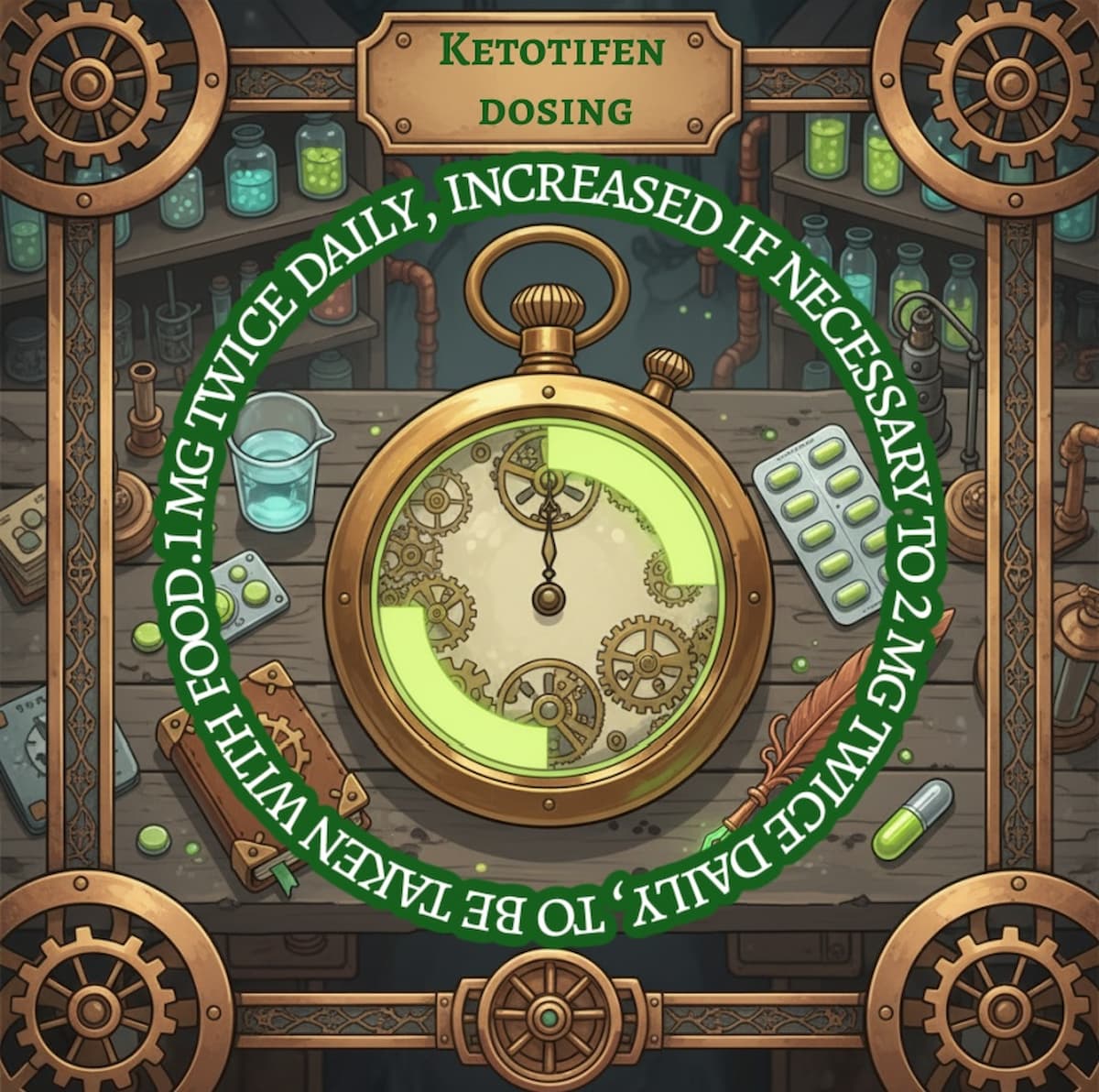
Each tablet delivers ketotifen fumarate, equivalent to 1mg of ketotifen. You usually take it twice a day on a regular schedule, rather than using it as an “as needed” rescue medicine [1]..
Prescribers use ketotifen in adults and, in some cases, in children, when they judge it appropriate and can monitor treatment closely.
In day?to?day practice, clinicians often add ketotifen 1mg tablets when standard antihistamines on their own do not keep symptoms under control, especially if you have multi?system allergic or mast?cell?related symptoms affecting your skin, gut or breathing [3], [4].
Typical uses of ketotifen
Long-term management of allergic rhinitis and hay fever
• Supportive treatment in chronic urticaria and itchy skin conditions
• Part of a wider plan in mast cell activation syndrome (MCAS), under specialist care
Additional information
Quantity
1 x 30, 2 x 30, 3 x 30, 4 x 30, 6 x 30
MOJO WISDOM
Take control of your health by understanding your condition and what this medication is doing for you.
In this deep dive, we’ll unpack what ketotifen 1mg tablets are, who they’re for, how they work, and how to use them safely, with a special focus on mast cell activation and allergy control.
What ketotifen 1mg tablets are and who might benefit from them
How ketotifen works as both an antihistamine and mast cell stabiliser
Typical doses, how long it takes to work, and practical tips for use
Important warnings, side effects, and drug interactions to know about
Answers to common real-world questions patients ask in the clinic
Overview: Ketotifen 1mg tablets
Key takeaways
Ketotifen 1mg tablets combine antihistamine effects with mast cell stabilisation
They are used for long-term control of allergic symptoms and some mast cell activation disorders
The medicine is taken regularly, usually twice daily, and can take weeks to reach full effect
Drowsiness, dry mouth and weight gain are among the more common side effects
Careful monitoring and specialist input are important when ketotifen is used for complex conditions like MCAS
Ketotifen 1mg tablets sit in an interesting space between classic antihistamines and more targeted mast cell treatments. On one hand, they block histamine, one of the main chemicals released during allergic reactions. On the other hand, they help stabilise mast cells, the immune cells that release histamine and other mediators in the first place [4],[5].
For people with straightforward hay fever, ketotifen may be one of several antihistamine options. For those with more complex patterns of flushing, rashes, gut upset and breathing symptoms suggestive of mast cell activation, ketotifen is sometimes added as part of a layered plan that can also include H1 and H2 antihistamines, leukotriene blockers and lifestyle changes [4],[5].
Because ketotifen can make some people drowsy, it is not always the first choice for daytime allergy control. However, for patients whose quality of life is badly affected by ongoing symptoms, the trade-off can be worthwhile if the medicine is effective and the sedation settles after the first few weeks [1], [2].
As with any long-term treatment, it is important to review ketotifen regularly with your prescriber. That includes checking whether it is still needed, whether the dose is correct, and whether any side effects or interactions have appeared over time [1], [2].
Active ingredient: ketotifen 1mg tablets
Each ketotifen 1mg tablet contains ketotifen fumarate, equivalent to 1mg of ketotifen [2].
Ketotifen belongs to the benzocycloheptathiophene group of medicines and is classed pharmacologically as a non-competitive H1?antihistamine with additional mast cell stabilising properties.
The tablets also contain several inactive ingredients (excipients), including lactose and other fillers; these are listed in the patient information leaflet and may be important for people with specific intolerances [2].
What are ketotifen 1mg tablets for?
Ketotifen 1mg tablets are used to help prevent and control symptoms caused by allergic conditions and mast cell activation [4],[5].
In routine allergy practice, ketotifen may be prescribed for:
Seasonal and perennial allergic rhinitis (hay fever and year-round nasal allergies)
• Allergic conjunctivitis and itchy, watery eyes
• Chronic urticaria and other histamine-driven skin conditions
In more specialised settings, ketotifen is sometimes used as part of a treatment plan for mast cell activation syndrome (MCAS) or related mast cell disorders, where mast cells release mediators too easily and too often [4],[5].
In these conditions, patients may experience a mix of:
Skin symptoms such as flushing, itching or hives
• Gut symptoms such as cramping, diarrhoea or nausea
• Cardiovascular symptoms such as palpitations or low blood pressure
• Respiratory symptoms such as wheeze or shortness of breath
Ketotifen is not a rescue medicine for anaphylaxis or severe acute allergic reactions. Anyone at risk of anaphylaxis should have an adrenaline auto-injector and an emergency plan agreed with their allergy team.
How do ketotifen 1mg tablets work?
Ketotifen 1mg tablets work in two main ways: by blocking histamine and by stabilising mast cells [1], [2].
First, ketotifen acts as an H1?antihistamine. Histamine is one of the key chemicals released during allergic reactions; when it binds to H1 receptors in the nose, skin and other tissues, it causes itching, swelling, redness and increased mucus. By blocking these receptors, ketotifen helps reduce these symptoms [1], [2].
Second, ketotifen has a mast cell stabilising effect. Mast cells are immune cells that sit in tissues such as the skin, gut and airways. When triggered, they release a cocktail of mediators including histamine, leukotrienes and prostaglandins. In mast cell activation disorders, this release happens too easily. Ketotifen helps reduce mast cells' tendency to degranulate, leading to fewer, less intense flares over time [4],[5].
Because of its dual action, ketotifen is often considered a “background” controller rather than a quick fix. It is taken regularly to calm the system down, a bit like turning down the volume on an over?sensitive alarm. Patients and clinicians usually judge its benefit over weeks to months, not hours [4],[5].
Some evidence suggests that combining mast cell stabilisers like ketotifen with other measures (for example, H1 and H2 antihistamines, leukotriene antagonists and trigger avoidance) can be more effective than any single intervention alone in complex mast cell activation syndromes [4],[5].
How to use ketotifen 1mg tablets
Always follow the instructions from your prescriber and the patient information leaflet supplied with your medicine [1], [2].
In general:
Swallow the tablets whole with a glass of water. Do not crush or chew them unless your pharmacist has told you it is safe to do so.
Try to take your doses at the same times each day, for example, morning and evening, to keep levels steady.
If you find ketotifen makes you sleepy, taking the evening dose earlier in the night and discussing dose timing with your prescriber can help.
If you miss a dose, take it when you remember, unless it is nearly time for your next dose. In that case, skip the missed dose and continue as usual. Do not double up to make up for a forgotten tablet [2].
If you feel ketotifen is not working for you, or side effects are troublesome, do not simply stop. Book a review with your doctor or specialist team to discuss dose adjustments, alternative options or a gradual taper if needed.
Warnings and precautions: Ketotifen 1mg tablets
Ketotifen 1mg tablets are not suitable for everyone. It is important to discuss your medical history and current medicines with your prescriber before starting treatment.
You should not take ketotifen if you are allergic to ketotifen or any of the tablet ingredients.
People with rare hereditary problems of galactose intolerance, total lactase deficiency or glucose?galactose malabsorption may not be able to take certain brands that contain lactose [1], [2].
Caution is advised in people with epilepsy or a history of seizures, as ketotifen may lower the seizure threshold in some cases [1], [2].
Liver problems have been reported very rarely, so people with existing liver disease should be monitored carefully and report any symptoms such as jaundice, dark urine or severe fatigue [1], [2].
Ketotifen can cause drowsiness, particularly in the first days of treatment or when the dose is increased. Until you know how it affects you, avoid driving, cycling in busy traffic or operating machinery. Combining ketotifen with alcohol or other sedating medicines can increase this effect [1], [2].
If you are pregnant, planning a pregnancy or breastfeeding, you should discuss the risks and benefits of ketotifen with your doctor. Human data are limited, so prescribers will usually consider alternative options first unless there is a clear clinical need [1], [2].
Side effects: Ketotifen 1mg tablets
Like all medicines, ketotifen 1mg tablets can cause side effects, although not everyone gets them. Many are mild and improve as your body adjusts [1], [2].
Drowsiness or sleepiness, especially at the start of treatment
• Dry mouth
• Increased appetite and possible weight gain
• Mild dizziness or fatigue
Less common side effects can include irritability, nervousness or sleep disturbance, particularly in children.
Rare but more serious reactions include:
Severe skin rashes, blistering or peeling
• Signs of liver problems such as yellowing of the skin or eyes, dark urine or pale stools
• Seizures or fits
If you experience any severe or worrying symptoms, stop taking ketotifen and seek urgent medical advice. In the UK, you can also report suspected side effects via the MHRA Yellow Card scheme, which helps improve the safety of medicines for everyone [1], [2].
For many people, drowsiness and dry mouth ease after the first week or two. Simple measures such as good hydration, sugar-free gum and taking the evening dose earlier can make these effects easier to live with. If side effects remain troublesome, speak to your prescriber about dose adjustments or alternative options.
Drug interactions: Ketotifen 1mg tablets
Ketotifen 1mg tablets can interact with other medicines, so it is important to give your doctor and pharmacist a complete list of everything you take, including over-the-counter products and herbal supplements.
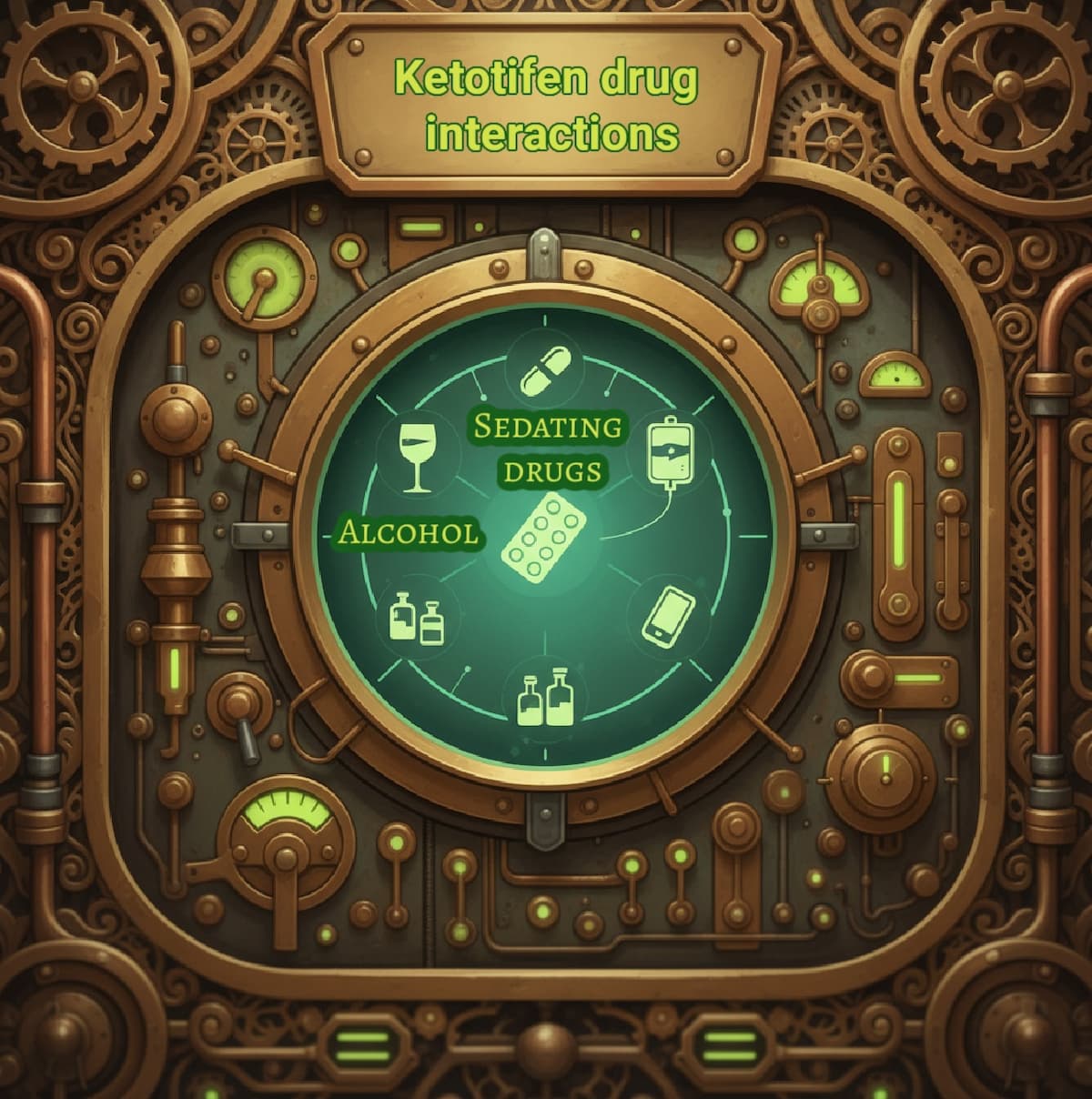
Sedating medicines are the primary concern. Combining ketotifen with alcohol, sleeping tablets, strong painkillers, some antidepressants or anxiety medicines can increase drowsiness and slow reaction times [1], [2]. If you already feel sleepy on your current treatment, adding ketotifen may make this worse.
Some oral diabetes medicines may interact with ketotifen, so people with diabetes should be monitored closely and may need adjustments to their usual regimen [1], [2].
If you use other antihistamines or mast cell-targeted medicines, your specialist will usually build ketotifen into a structured plan rather than stacking drugs at random.
In mast cell activation syndromes, combination therapy is common, but it must be used thoughtfully to balance benefits and side effects [4],[5].
Never change or stop your asthma medicines without medical advice. If ketotifen is being added to a regimen that includes inhalers or other controllers, your respiratory or allergy team will guide any future step?downs once things are stable [1], [2].
If in doubt, ask your pharmacist to run an interaction check before you start ketotifen 1mg tablets. It is a quick conversation that can prevent a lot of hassle later.
FAQs: Ketotifen 1mg tablets
What are ketotifen 1mg tablets used for?
Ketotifen 1mg tablets are used to help prevent and control symptoms of allergic conditions such as hay fever, allergic rhinitis and some forms of chronic urticaria. In specialist practice, they may also be used as part of a treatment plan for mast cell activation disorders when advised by an allergy or immunology team.
How do ketotifen 1mg tablets help in mast cell activation syndrome (MCAS)?
In MCAS, mast cells release chemicals like histamine too easily, causing multi-system symptoms. Ketotifen acts as both an antihistamine and a mast cell stabiliser, helping to reduce the release and effect of these mediators over time.
Can I buy ketotifen in the UK?
Yes, you can buy ketotifen 1mg tablets in the UK after completing the online MCAS consultation form at medicalmojo.co.uk.
How long does it take for ketotifen 1mg tablets to work?
Some people notice improvement within a few days, but it can take several weeks to feel the full benefit, especially in mast cell activation conditions, where the aim is long-term stabilisation rather than quick symptom relief.
How should I take ketotifen 1mg tablets?
Ketotifen is usually taken as 1mg twice daily, swallowed whole with water, at the same times each day. Your doctor may adjust the dose depending on your response and side effects.
Can ketotifen 1mg tablets make me sleepy?
Yes. Drowsiness is one of the most common side effects, particularly when you first start treatment or when the dose is increased. Avoid driving or operating machinery until you know how it affects you.
Is it safe to drink alcohol while taking ketotifen?
Alcohol can increase the sedative effects of ketotifen and make you more drowsy or unsteady. It is usually best to limit or avoid alcohol, especially in the early weeks of treatment.
Can children take ketotifen 1mg tablets?
Ketotifen can be used in children in certain situations, but dosing is different, and it should only be prescribed and monitored by a paediatrician or suitably experienced clinician.
Can I take ketotifen 1mg tablets if I am pregnant?
If you are pregnant or planning a pregnancy, you should discuss the risks and benefits with your doctor. Human pregnancy data are limited, so ketotifen is usually only used when clearly needed and when other options are not suitable.
Is ketotifen safe while breastfeeding?
Small amounts of ketotifen may pass into breast milk. Your doctor will weigh up the potential benefits for you against any possible risks for your baby and may suggest alternative treatments in some cases.
What should I do if I miss a dose?
If you forget a dose, take it as soon as you remember, unless it is nearly time for your next one. If it is close to the next dose, skip the missed tablet and continue as usual. Please do not take a double dose to make up for it.
Can I stop taking ketotifen 1mg tablets suddenly?
You should not stop ketotifen suddenly without medical advice, particularly if it has been used for asthma or mast cell activation disorders, as symptoms can flare. Your prescriber may recommend a gradual reduction instead.
Do ketotifen 1mg tablets cause weight gain?
Increased appetite and weight gain have been reported in some people taking ketotifen. If this is a concern, speak to your doctor or pharmacist about strategies to manage it or alternative treatments.
Can I take ketotifen with other antihistamines?
Sometimes ketotifen is used alongside other antihistamines as part of a layered allergy or mast cell plan, but this should always be done under medical supervision to avoid excessive sedation or duplicated treatment.
Is ketotifen 1mg tablets the same as ketotifen eye drops?
No. Ketotifen eye drops are used directly in the eyes for allergic conjunctivitis, whereas ketotifen 1mg tablets work throughout the body. They are different formulations and are used in different ways.
Can ketotifen help asthma?
Ketotifen has been used as an add-on in some asthma regimens, particularly where allergy and mast cell activation play a role, but it is not a rescue inhaler. It must never replace your usual preventer or reliever inhalers.
What happens if I take too many ketotifen tablets?
Taking more than the prescribed dose can increase side effects such as drowsiness, confusion or low blood pressure. If you or someone else has taken too many tablets, seek urgent medical advice or attend A&E, taking the medicine pack with you.
Are there lifestyle changes that work well with ketotifen?
Yes. Many people find they get the best results when ketotifen is combined with trigger management (for example, pollen avoidance in hay fever), good sleep habits, stress reduction and a personalised flare plan agreed with their clinician.
Are ketotifen 1mg tablets available over the counter?
In the UK, ketotifen 1mg tablets are a prescription-only medicine. You will need a valid prescription from a doctor or other authorised prescriber to order them from an online pharmacy such as Medical Mojo.
How is ketotifen different from standard non-drowsy antihistamines?
Standard non-drowsy antihistamines mainly block histamine at H1 receptors. Ketotifen does this but also stabilises mast cells, which may be helpful in people whose symptoms are driven by broader mast cell activation rather than histamine alone. The trade-off is that ketotifen is more likely to cause drowsiness.
Who should I talk to if I am unsure whether ketotifen 1mg tablets are right for me?
A good starting point is your GP, an allergy specialist, or a pharmacist. They can review your symptoms, current medicines and medical history, and help you decide whether ketotifen fits into your overall treatment plan or whether another option would be better.
Disclaimer: This article is for informational purposes only and does not replace professional medical advice.