Home » Treatment » Rectogesic 4 mg/g Rectal Ointment
Sale!
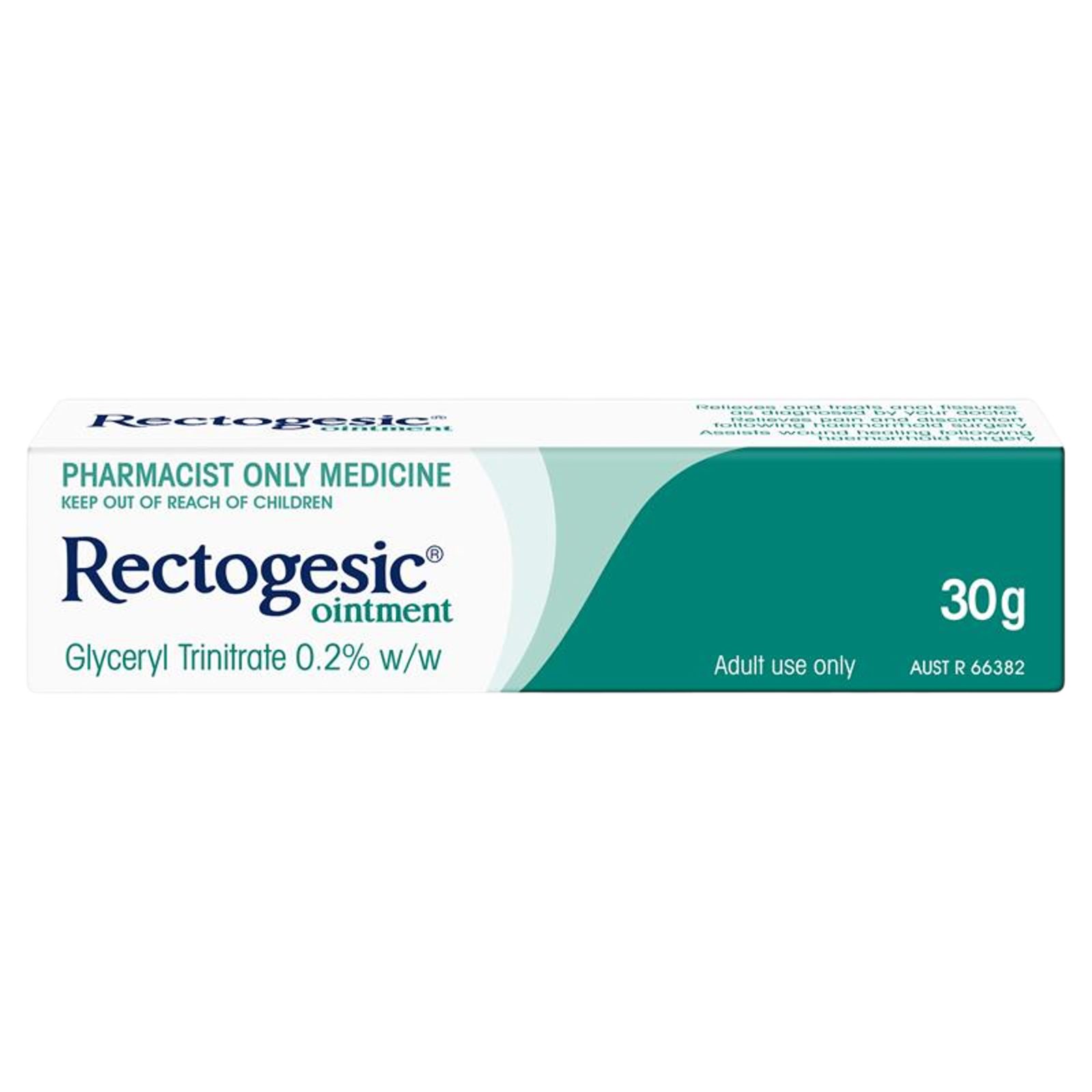
Rectogesic 4 mg/g Rectal Ointment
from£64.99
Rectogesic 4 mg/g Rectal Ointment is a prescription GTN ointment used in adults to relieve pain from chronic anal fissure by relaxing the internal anal sphincter and improving local blood flow.
Rectogesic 4 mg/g Rectal Ointment is a prescription-only rectal ointment. It is used to relieve pain associated with chronic anal fissures.[1] If you’ve ever heard someone describe an anal fissure as “a paper cut in the worst possible place”, they’re not being dramatic. The pain can be sharp, burning, and long-lasting, especially after a bowel movement.[2]
Rectogesic 4 mg/g Rectal Ointment works by delivering glyceryl trinitrate (GTN) to the anal canal. GTN is a nitric oxide donor. In simple terms, it helps the internal anal sphincter relax, which can reduce spasm and improve blood flow to the area.[1]
Better blood flow can support the conditions your body needs to recover. This is despite the fact that the medicine is licensed for pain relief rather than guaranteed healing.[1]
The Rectogesic Ointment is usually considered after basic measures haven’t done the trick, such as increasing fibre intake and fluids, and using stool softeners where needed.[3] It’s not a “magic wand”, but for many people it can make the day-to-day pain more manageable while the fissure settles.
What’s in the tube
Active ingredient: glyceryl trinitrate 4 mg per gram[1]
Common excipients: propylene glycol and lanolin (can irritate sensitive skin)[1]
Five key takeaways
It’s for pain relief in chronic anal fissure, not a guaranteed “healing cream”.[1]
It relaxes the internal anal sphincter, which can reduce spasm and improve blood flow.[1]
Rectogesic 4 mg/g Rectal Ointment is a prescription treatment used to help relieve pain linked to chronic anal fissure. In this deep dive, we’ll cover what it is, who it’s for, how it works, how to use it safely, and what to do if it’s not helping.
Key takeaways
Rectogesic 4 mg/g Rectal Ointment is used in adults to relieve pain from chronic anal fissure.[1]
It contains glyceryl trinitrate (GTN), which relaxes the internal anal sphincter and improves blood flow.[1]
The usual dose is applied inside the anal canal every 12 hours for up to 8 weeks.[1]
Headache is the most common side effect, and it can be dose-related.[1]
You must not use Rectogesic 4 mg/g Rectal Ointment with PDE5 inhibitors like sildenafil, tadalafil, or vardenafil.[1]
Overview: Rectogesic 4 mg/g Rectal Ointment
Rectogesic 4 mg/g Rectal Ointment sits in a slightly odd spot in anal fissure care. It’s not the first thing most people try, because a lot of fissures heal with time, softer stools, and less straining.[2] But when pain becomes persistent and the fissure is classed as chronic, that’s when medicines that relax the sphincter can be helpful.[3]
The main goal is to break the pain-spasm cycle. Pain causes the sphincter to tighten, which reduces blood flow, which can slow recovery, which causes more pain. Not exactly a great loop.[3]
Rectogesic 4 mg/g Rectal Ointment provides GTN locally. GTN is well known in medicine for relaxing smooth muscle in blood vessels. In the anal canal, that relaxation can reduce resting pressure and improve blood flow to the anoderm.[1]
If you’re using Rectogesic 4 mg/g Rectal Ointment, it’s worth treating the basics like they matter (because they do). Fibre, fluids, and not delaying the toilet are still the foundation.[2] Think of Rectogesic as the “helper tool”, not the whole toolbox.
Finally, if you’ve had symptoms for more than 8 weeks, or you’re getting bleeding, weight loss, or other red flags, you need a proper review. Most fissures are benign, but you don’t want to guess.[2]
Active ingredient: Rectogesic 4 mg/g Rectal Ointment
Rectogesic 4 mg/g Rectal Ointment contains glyceryl trinitrate (GTN) at 4 mg per gram.[1] The delivered dose from the standard application is about 1.5 mg GTN.[1]
GTN is an organic nitrate. It releases nitric oxide, which relaxes smooth muscle. In this setting, the target is the internal anal sphincter.[1]
What is Rectogesic 4 mg/g Rectal Ointment used for?
Rectogesic 4 mg/g Rectal Ointment is indicated in adults for relief of pain associated with chronic anal fissure.[1]
An anal fissure is a small tear in the lining of the anal canal. It often causes sharp pain during bowel movements and can lead to bright red bleeding.[2] If symptoms last beyond around 6–8 weeks, it’s often described as chronic, and it may be harder to settle without targeted treatment.[3]
How does Rectogesic 4 mg/g Rectal Ointment work?
Rectogesic 4 mg/g Rectal Ointment works by releasing nitric oxide from GTN. Nitric oxide relaxes smooth muscle, including the internal anal sphincter.[1]
In chronic anal fissure, the internal anal sphincter can be overly tight (hypertonic). That tightness can reduce blood flow to the anoderm and contribute to poor healing conditions.[1] Relaxing the sphincter can reduce resting pressure and improve blood flow.[1]
Clinical trials show Rectogesic 4 mg/g Rectal Ointment can reduce average daily pain intensity compared with placebo, although healing rates were not statistically different from placebo in those studies.[1]
That’s why it’s best to think of it as pain relief that supports recovery, rather than a guaranteed cure.
How to use Rectogesic 4 mg/g Rectal Ointment
Wash your hands before and after use. Many people find it easiest to apply after a bowel movement, but follow your prescriber’s advice.
Use a finger covering (finger cot or cling film). Squeeze a strip of ointment about 2.5 cm long onto your finger, using the dosing line on the carton as a guide.[1]
Gently insert your finger into the anal canal up to the first finger joint and apply the ointment around the inside of the anal canal. Use it every 12 hours.[1]
Warnings and precautions: Rectogesic 4 mg/g Rectal Ointment
Rectogesic 4 mg/g Rectal Ointment can cause low blood pressure, dizziness, and light-headedness. Stand up slowly, especially if you’re prone to fainting.[1]
Headache is very common and can be severe. If headaches are intense, your prescriber may review dosing or consider alternatives.[1]
Do not use Rectogesic 4 mg/g Rectal Ointment if you have certain heart conditions, severe anaemia, raised intracranial pressure, or closed-angle glaucoma.[1]
If bleeding from haemorrhoids increases, stop and seek advice. If anal pain persists, you may need assessment to rule out other causes.[1]
Side effects: Rectogesic 4 mg/g Rectal Ointment
The most common side effect is headache, reported very commonly and often dose-related.[1]
Other possible side effects include dizziness, nausea, diarrhoea, anal discomfort, itching, and, less commonly, low blood pressure or fast heart rate.[1]
If you feel faint, have severe dizziness, or symptoms of an allergic reaction, seek urgent medical help.
Drug interactions: Rectogesic 4 mg/g Rectal Ointment
Do not use Rectogesic 4 mg/g Rectal Ointment with PDE5 inhibitors (sildenafil, tadalafil, vardenafil). This combination can cause severe hypotension and is contraindicated.[1]
Alcohol can increase the blood pressure lowering effects, so take care.[1]
Other medicines that lower blood pressure (some antidepressants, antipsychotics, antihypertensives, diuretics, and vasodilators) may increase the risk of dizziness or fainting.[1]
FAQ: Rectogesic 4 mg/g Rectal Ointment
How long does Rectogesic 4 mg/g Rectal Ointment take to work?
Some people notice pain relief within days, but it can take longer. Treatment is usually continued for up to 8 weeks.[1]
How long can I use Rectogesic 4 mg/g Rectal Ointment?
Up to a maximum of 8 weeks, unless your prescriber advises otherwise.[1]
Can Rectogesic 4 mg/g Rectal Ointment heal my fissure?
It’s licensed for pain relief. Healing may happen as the area is less tense and better perfused, but trials did not show a clear healing advantage over placebo.[1]
Why does Rectogesic 4 mg/g Rectal Ointment cause headaches?
GTN widens blood vessels. That vasodilation can trigger headaches, especially early on.[1]
What can I take for Rectogesic 4 mg/g Rectal Ointment headaches?
Many people use simple pain relief like paracetamol. If headaches are severe, speak to your prescriber.[1]
Can I drink alcohol while using Rectogesic 4 mg/g Rectal Ointment?
Alcohol can increase dizziness and low blood pressure risk, so it’s best to be cautious.[1]
Can I use Rectogesic 4 mg/g Rectal Ointment if I’m pregnant?
What if Rectogesic 4 mg/g Rectal Ointment doesn’t help after 8 weeks?
You’ll likely need review and possible referral for specialist treatments.[3]
Disclaimer: This article is for informational purposes only and is not a substitute for professional medical advice. Always speak to a qualified clinician or pharmacist before starting, stopping, or changing treatment.
Written by Medical Mojo editorial team. Clinically reviewed by a UK-registered pharmacist.
How this content was created
We wrote this guide for medicalmojo.co.uk using the Rectogesic Summary of Product Characteristics, NHS patient information, and NICE Clinical Knowledge Summaries. We also added practical tips based on common patient questions seen in pharmacy practice. Always follow your prescriber’s advice and the patient information leaflet.







 Rectogesic 4 mg/g Rectal Ointment works by releasing nitric oxide from GTN. Nitric oxide relaxes smooth muscle, including the internal anal sphincter.
 Wash your hands before and after use. Many people find it easiest to apply after a bowel movement, but follow your prescriber’s advice.
Use a finger covering (finger cot or cling film). Squeeze a strip of ointment about 2.5 cm long onto your finger, using the dosing line on the carton as a guide.
Wash your hands before and after use. Many people find it easiest to apply after a bowel movement, but follow your prescriber’s advice.
Use a finger covering (finger cot or cling film). Squeeze a strip of ointment about 2.5 cm long onto your finger, using the dosing line on the carton as a guide. The most common side effect is headache, reported very commonly and often dose-related.