For anyone navigating the bewildering world of chronic fatigue syndrome, the hunt for something that genuinely helps can feel like a quest through a steampunk maze. One option that’s gaining more attention is Low Dose Naltrexone (LDN), an off-label treatment that, while not a cure, offers a glimmer of hope for managing some of the condition’s toughest symptoms.
Many patients and clinicians who have explored LDN report it can help dial down the pain, clear some of the notorious ‘brain fog’, and ease the profound fatigue that defines this illness—all by helping to gently rebalance the body’s immune system.
Table of contents
- Introduction to LDN and chronic fatigue syndrome: a UK patient’s guide
- Five key takeaways
- Understanding the ME/CFS challenge in the UK
- Chronic fatigue syndrome, a condition in need of new approaches
- How Low Dose Naltrexone works for ME/CFS
- Reviewing the evidence for LDN
- Understanding the gender disparity
- Starting your LDN journey safely
- The art of titration
- Understanding potential side effects
- Why you need compounded LDN
- Navigating potential risks and side effects
- How to access LDN in the UK
- Got questions about LDN?
- Your next step with Medical Mojo
- How this content was created:
- References
Introduction to LDN and chronic fatigue syndrome: a UK patient’s guide
Living with chronic fatigue syndrome (ME/CFS) can feel like your body’s stuck in low-power mode, with no obvious switch to flick it back on. If you’ve tried the usual routes and still feel like you’re wading through treacle, it makes sense to look at newer options.
Low dose naltrexone (LDN) is one of those options. It’s an off-label treatment, so it isn’t a cure and it isn’t a quick fix. But some patients and clinicians report it can help with a few of the hardest bits of ME/CFS, like pain, brain fog, and that bone-deep fatigue, by gently nudging the immune and nervous systems towards a calmer setting.
This guide walks you through the UK picture: how common ME/CFS is, what the latest data suggests, how LDN may work, what the evidence looks like so far, and how to start safely if it’s appropriate for you.
Five key takeaways
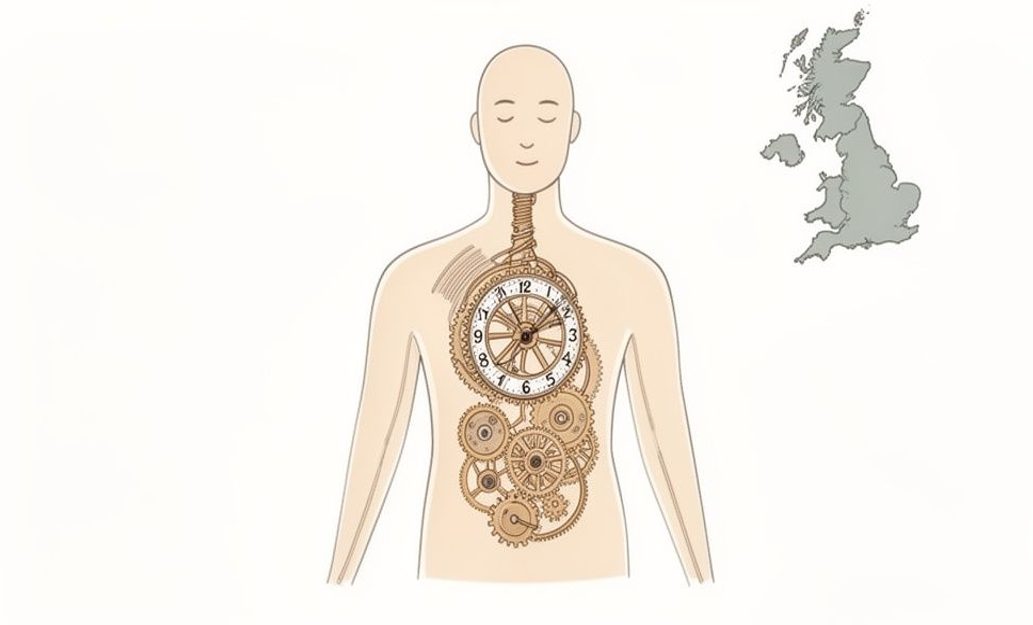
- ME/CFS is more common than many people realise, with newer NHS-record research suggesting at least 404,000 diagnosed people in England alone.
- LDN is off-label for chronic fatigue syndrome, meaning it’s used outside its original licence, and it won’t suit everyone.
- The main theory is that LDN may help via an endorphin rebound effect and by calming neuroinflammation linked to overactive immune signalling in the brain.
- If it helps, it tends to be gradual, so the safest approach is start low, go slow, and track symptoms over weeks to months.
- LDN must not be taken with opioid-based painkillers (including codeine and tramadol), and it should be started with proper clinical oversight and a clear plan.
Understanding the ME/CFS challenge in the UK
Life with Myalgic Encephalomyelitis, or chronic fatigue syndrome (ME/CFS), is an immense daily struggle. It’s a complex, multi-system illness that goes far beyond simple tiredness. The hallmark symptom is a debilitating fatigue that rest doesn’t touch, accompanied by a whole host of other issues.
These often include post-exertional malaise (a severe crash after minor effort), chronic pain, unrefreshing sleep, and cognitive problems that feel like wading through treacle. For thousands, it’s a condition that completely upends life, relationships, and the ability to work or study.
The scale of the problem in Great Britain
For years, the official estimate put the number of people with ME/CFS in the UK at around 250,000. But those living with the condition, and the groups supporting them, have long suspected the real figure was much higher.
They were right. A recent landmark study from the University of Edinburgh, which analysed NHS data from over 62 million people, found that at least 404,000 individuals in England have a diagnosis of ME/CFS or post-viral fatigue syndrome. That’s a staggering 62% increase on the old estimate [1].
ME/CFS in the UK at a glance
This table breaks down the latest findings, highlighting just how widespread this condition is.
| Statistic | Finding |
| Total diagnosed individuals | At least 404,000 people in England |
| Previous estimate | 250,000 people across the UK |
| Increase from previous estimate | 62% higher than previously thought |
| Gender disparity | Nearly 3 times more common in women than men |
| Prevalence in women | 1 in 133 women affected |
These updated figures from the University of Edinburgh’s research paint a much clearer picture of a major public health issue, reinforcing the urgent need for better treatment options.

Chronic fatigue syndrome, a condition in need of new approaches
The path to a diagnosis is often long and frustrating, and finding effective treatments can feel like a game of trial and error. Because ME/CFS is so complex, there’s no one-size-fits-all solution, which makes exploring different therapeutic routes crucial. You can find more details about the condition in our guide on what chronic fatigue syndrome is.
This is where promising, if sometimes misunderstood, treatments like Low Dose Naltrexone (LDN) come into the picture. It’s not a conventional therapy, but its unique mechanism offers a different way to tackle the immune dysregulation and neuroinflammation thought to drive ME/CFS.
If you think of the body’s systems as an overwound clockwork machine, with gears spinning out of sync, LDN acts like a gentle regulator. It aims to carefully nudge that delicate balance back towards normal. This guide will explore the potential of LDN and chronic fatigue syndrome, offering a hopeful but realistic look at how it might help manage this challenging condition.
How Low Dose Naltrexone works for ME/CFS
To get your head around how a tiny dose of a drug can help with something as complex as ME/CFS, it helps to stop thinking of it as a powerful sledgehammer. Instead, picture it as a subtle tuning fork for your body’s internal orchestra. Low Dose Naltrexone, or LDN, works on a completely different principle from its high-dose version used in addiction treatment.
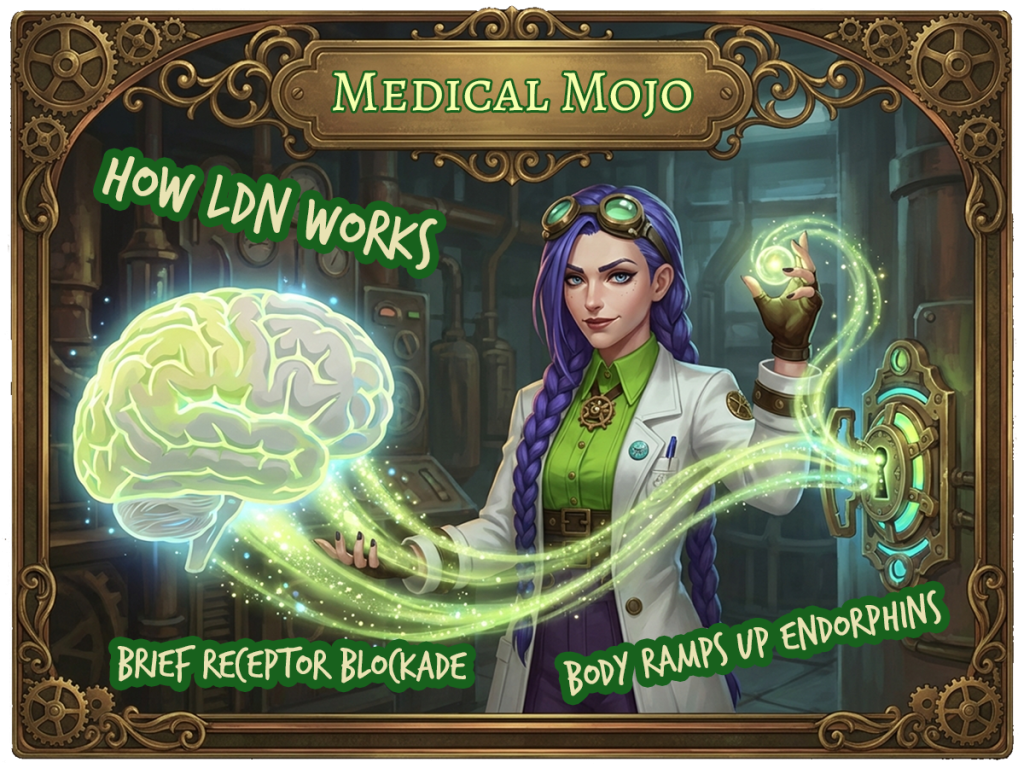
At a high dose (50-100mg), Naltrexone puts a complete, round-the-clock blockade on the body’s opioid receptors. But in the tiny doses used for ME/CFS—usually between 0.5mg and 4.5mg—it only creates a brief, temporary blockade for a few hours. This short interruption is the clever bit that kicks off a cascade of positive effects.

The endorphin rebound effect
Think of your body’s natural pain-relieving and mood-lifting chemicals, known as endorphins, as messengers. When LDN briefly blocks the receptors, these messengers talk to, the brain senses a problem: “Hang on, we’re not getting enough messages through!”
In response, it ramps up production, getting ready to send out a fresh, abundant wave of endorphins. This is what’s known as the ‘rebound effect’. As soon as the temporary blockade wears off, this bigger supply of endorphins can get to work, helping to regulate pain, improve mood, and calm the immune system.
This gentle, biological nudge is the core mechanism behind LDN. It doesn’t force a change with a powerful new chemical; it just encourages your body to rebalance its own natural systems.
Calming overactive brain cells
One of the main theories behind ME or chronic fatigue syndrome points to neuroinflammation—a persistent, low-level inflammation simmering away in the brain and central nervous system. This is where another of LDN’s key actions comes into play. It helps to calm down specific immune cells in the brain called glial cells.
In a healthy state, glial cells are the brain’s helpful housekeepers. But in chronic conditions like ME/CFS, they can become overactive, pumping out a steady stream of inflammatory chemicals (cytokines) that fuel symptoms like brain fog, pain, and that bone-deep fatigue.
LDN is thought to be an effective glial cell modulator. By dialling down their overactivity, they help quieten this neuroinflammatory storm, creating a calmer environment in the central nervous system. This might be one of the main reasons why people taking LDN for chronic fatigue syndrome report clearer thinking and a reduction in that all-encompassing exhaustion. For more general information, you can explore our comprehensive guide on Low Dose Naltrexone.
A master regulator for the immune system
At its heart, ME/CFS is widely seen as a condition of immune dysregulation. The immune system, which should be defending the body, seems to get stuck on high alert. LDN’s ability to boost endorphins and calm glial cells makes it a powerful immunomodulator—a substance that helps restore balance to the immune system.
It doesn’t aggressively suppress the immune system like some heavy-duty medications. Instead, it works more subtly to regulate its functions, encouraging it to behave more appropriately. This dual action—reducing inflammation while rebalancing the immune response—is what makes LDN such a unique and promising approach for managing the tangled web of symptoms in chronic fatigue syndrome.
Reviewing the evidence for LDN
When you’re exploring a treatment like LDN for chronic fatigue syndrome, one question stands out: where’s the proof? It’s a fair question, and the honest answer is that the research landscape for LDN and chronic fatigue syndrome is best described as emerging and encouraging.
Right now, there aren’t any large-scale, randomised controlled trials specifically for ME/CFS. This isn’t unusual for off-label medicines that don’t have the huge financial backing of a pharmaceutical company. However, what we do have is a growing body of evidence from smaller studies, patient surveys, and clinical observations that all point towards its potential.

Building a case from related conditions
A lot of the confidence in using LDN for ME/CFS comes from looking at conditions with similar symptoms, especially Fibromyalgia. Clinical reviews have found that LDN can genuinely reduce symptom severity in Fibromyalgia by tackling inflammation in a novel way [2]. Since both conditions share a frustrating overlap of chronic pain, fatigue, and neuroinflammation, these findings are highly relevant.
We’re also seeing early studies into Long COVID, another post-viral illness with striking similarities to ME/CFS, suggesting that LDN could help improve wellbeing [3]. This collection of data, pushed forward by pioneers like Norwegian researchers, helps build a compelling, if indirect, case for its use. You can take a closer look at the evidence for LDN in Fibromyalgia in our other article.
Patient experiences and observational data
Beyond the formal studies, there’s a huge amount of anecdotal evidence from patients that offers powerful, real-world insight. For many, the proof is simply in how they feel day-to-day. While these personal stories aren’t science in the strictest sense, they consistently highlight improvements in areas that clinical trials often struggle to measure, like quality of life and the simple ability to get through a day.
A patient’s story “Before LDN, every day was a battle against a thick fog in my head and a body made of lead. Getting out of bed felt like climbing a mountain. About three months after starting, I noticed small changes. The fog started to lift for a few hours each day, and the relentless, aching pain wasn’t my first thought in the morning. It wasn’t a magic wand, but it gave me back pieces of myself I thought were gone forever.” – Sara, 52, anonymised for privacy.
Understanding the gender disparity
It’s impossible to talk about ME/CFS without acknowledging the stark gender gap. The data paints a sobering picture of how ME/CFS disproportionately burdens women. An analysis by the University of Edinburgh of 62,782,175 people in England’s NHS database found the lifetime prevalence is 0.92% for women (around 320,296 across the UK), compared to just 0.25% for men (83,626). In middle age, women are six times more likely to be affected than men. You can read more about these findings from ME Research UK.
This disparity highlights just how urgently we need personalised treatments. Because LDN works by gently modulating an individual’s own immune and endorphin systems, it offers a more tailored approach than a one-size-fits-all pill. For the many women managing this condition, having access to these kinds of personalised options is a vital step forward.
Starting your LDN journey safely
Beginning any new treatment for chronic fatigue syndrome can feel like a big step, so it’s vital to approach it with care and a clear head. When it comes to Low Dose Naltrexone, there’s one golden rule that stands above all others: the ‘start low, go slow’ philosophy. This isn’t a race. Think of it as a gentle process of listening to your body and finding the precise dose that’s right for you.
Patience is your best friend on this journey. Unlike a painkiller that offers immediate relief, LDN works its magic subtly in the background, helping to rebalance your immune and endorphin systems over time. Often, the benefits creep up on you slowly, with many people only noticing a real shift after several months of consistent use.
The art of titration
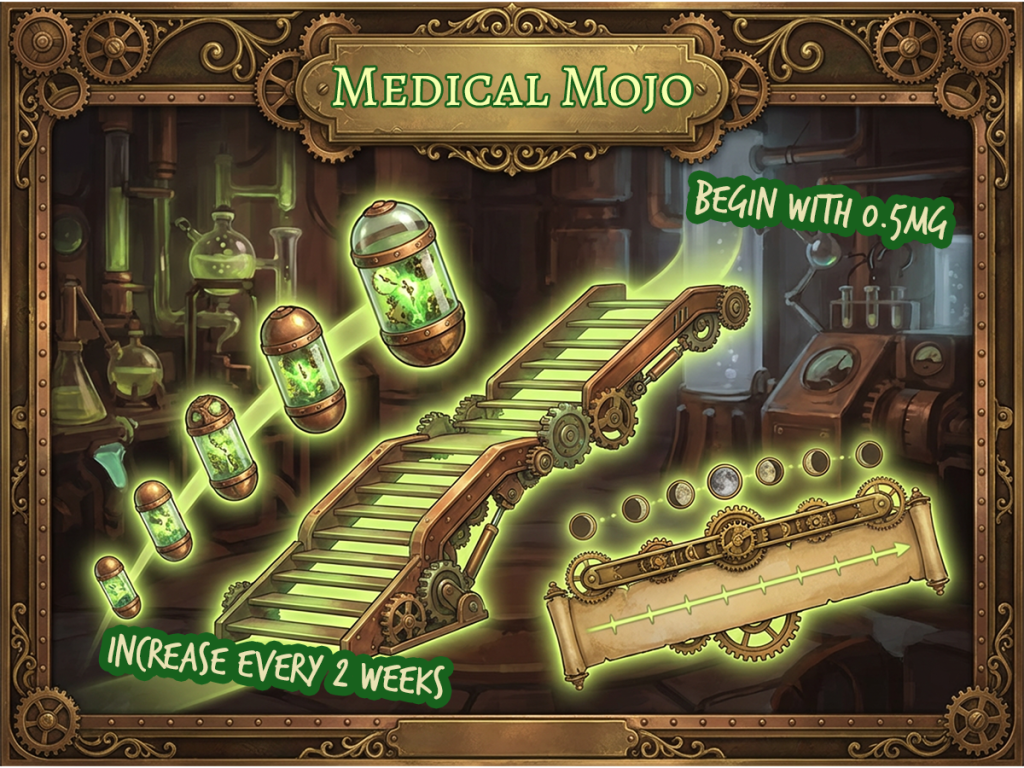
In medicine, we call the process of gradually increasing a dose titration. For LDN, this means starting with an extremely low dose. This simple step allows your body to acclimatise to the medication, which dramatically minimises the chance of side effects and helps you pinpoint your personal ‘sweet spot’ for treatment. A typical starting dose is often just 0.5mg or 1.5mg per day.
From that starting point, your clinician will guide you on a slow and steady increase, usually every couple of weeks, until you find a maintenance dose that feels effective. For most people with ME/CFS, this sweet spot is somewhere between 3mg and 4.5mg a day, but this is highly individual. Some people find they do best on a dose that’s even lower.
To give you a clearer picture, here is a sample schedule showing how this gradual process might look. Please remember, this is just an example; your actual plan must be created with your prescriber based on your unique needs.
Example LDN titration schedule for ME/CFS
| Week | Daily Dose | Notes |
| Weeks 1-2 | 1.5mg | Take at bedtime. Keep an eye on any changes to your sleep. |
| Weeks 3-4 | 3.0mg | Increase the dose if you’re feeling well. Note any changes in energy or pain levels. |
| Weeks 5 onwards | 4.5mg | Continue at this maintenance dose. A simple symptom diary can be really helpful here. |
This table illustrates a common titration path, but your journey might be faster or slower, and may even begin with lower doses, such as 0.5mg. The key is to listen to your body and communicate with your clinician every step of the way.
Understanding potential side effects
One of the main reasons LDN is such an appealing option is that it’s generally very well-tolerated. When side effects do pop up, they are typically mild and often fade as your body gets used to the new dose.
The most reported side effects include:
- Vivid dreams: Many people notice their dreams become more intense or memorable. This is usually temporary and often seen as a sign that the medication is starting to work on the brain’s endorphin system.
- Initial sleep changes: A few people experience a bit of trouble sleeping for the first few nights. If this continues, simply taking your dose in the morning instead of at night often solves the problem.
- Mild headaches: These can occasionally happen when you start or increase your dose, but they typically resolve within a few days.
If any side effects are bothering you, the solution is often as simple as reducing the dose for a little while before trying to increase it again. This really underscores why that ‘go slow’ approach is so important.
Why you need compounded LDN
This is a crucial point that simply cannot be stressed enough: you cannot cut up a standard 50mg Naltrexone tablet. These high-dose tablets are made for treating addiction and are completely impossible to divide accurately and safely into the tiny microdoses needed for LDN therapy.
To start your journey with LDN and chronic fatigue syndrome, you must get your prescription from a provider who works with a specialist compounding pharmacy. This is the only way to ensure your medicine is created to the exact, precise dose you need.
A compounding pharmacy makes your LDN from scratch, using pharmaceutical-grade ingredients to create bespoke capsules or liquids tailored just for you. This guarantees accuracy, safety, and quality. It’s essential to use a provider registered with the General Pharmaceutical Council (GPhC). You can learn more about how Medical Mojo sources safe, quality-assured medicines to give you complete peace of mind. This bespoke approach is fundamental to a safe and effective LDN experience.
Navigating potential risks and side effects
While Low Dose Naltrexone is generally well-tolerated, it’s certainly not a one-size-fits-all treatment. Your safety is always the top priority, so understanding the potential risks and knowing who should avoid LDN is a crucial first step in making an informed decision about your health.
The single most important rule is this: LDN and opioid-based painkillers cannot be taken together. This isn’t just a recommendation; it’s a critical safety warning. Because LDN works by temporarily blocking opioid receptors, taking it alongside medicines like codeine, tramadol, morphine, or oxycodone will completely cancel out their pain-relieving effects.
Worse still, the combination can trigger sudden and severe opioid withdrawal symptoms, which can be a deeply unpleasant and dangerous experience. It is essential to have a frank conversation with your clinician about any and all pain medications you are currently taking before you even consider starting LDN.
Who should avoid LDN?
Beyond the hard-and-fast rule about opioids, there are other situations where LDN may not be the right choice. A thorough clinical consultation is needed to make sure it’s a safe option for your specific circumstances.
You should not take LDN if you:
- Are currently taking opioid-based medications: This includes prescription painkillers and medicines for opioid dependence like methadone.
- Are pregnant or breastfeeding: There simply isn’t enough research yet to confirm its safety during this time.
- Have significant liver disease: Your liver processes the medicine, so impaired function could be a concern.
- Are awaiting surgery that will require opioid pain relief: You would need to stop taking LDN well in advance of the procedure.
It’s also important to discuss your full medical history with your prescriber, particularly if you have other autoimmune conditions or take any other medicines, to check for potential interactions.

Understanding common side effects
One of the most reassuring things about using LDN for chronic fatigue syndrome is that when side effects do happen, they are usually mild and temporary. Most people find they fade within the first couple of weeks as their body adjusts to the new medicine.
The most common ones you might notice are:
- Vivid dreams: This is often the first thing people report. While they can be intense at first, many come to see it as a sign that the LDN is starting to interact with their brain’s endorphin systems.
- Sleep disruption: Some people find it a bit harder to fall asleep for the first few nights. This is often easily fixed by switching to a morning dose instead of taking it at bedtime.
- Mild headaches or nausea: These can sometimes pop up when you first start or increase your dose, but typically settle down on their own.
The key to managing these effects is good communication with your clinician and sticking to the ‘start low, go slow’ approach. If a side effect is bothersome, the dose can often be temporarily reduced before trying to increase it again more slowly. This gentle, patient-led process puts you in control of your treatment journey.
How to access LDN in the UK
So, if you’re looking into LDN and chronic fatigue syndrome, the next question is a practical one: how do you get it in the UK? Because it’s an ‘off-label’ treatment for ME/CFS, the process can feel a little different to getting a standard prescription. But don’t worry, there are clear, safe routes available.
You can always start by speaking with your NHS GP. It’s a good idea, though, to be prepared for some hesitation. GPs are often constrained by NHS guidelines and may be reluctant to prescribe medicines outside their licensed use without more large-scale trial data. While some are supportive, many may not feel they have the expertise to oversee this specialist treatment.
Another path is to see a private specialist who has experience with ME/CFS and is familiar with prescribing LDN. This is a great option for expert-led care, but it often comes with long waiting lists and can be quite costly, which makes it a difficult road for many to follow.
The modern, convenient pathway
Thankfully, a third way combines expertise with convenience. A certified online service offers a safe, modern, and expert-led option for accessing bespoke compounded medicines like LDN. This approach helps you bypass long waits and connects you directly with GPhC-registered prescribers who specialise in this area.
This route is designed to be straightforward and supportive. It ensures you receive personalised care from clinicians who really understand the nuances of LDN and chronic fatigue syndrome. The entire process, from your first consultation to receiving your medicine, is handled with care and discretion.
The journey usually involves a few simple steps:
- Comprehensive online consultation: You’ll start by filling out an in-depth online questionnaire. This covers your medical history, symptoms, and current medications, giving the clinical team a full picture of your health.
- Expert clinician review: A UK-based, GPhC-registered clinician will carefully review your submission to determine if LDN is a safe and appropriate option for you.
- Prescription sent to pharmacy: If approved, your prescription is sent directly to a specialist compounding pharmacy. This is where your bespoke LDN capsules are made to your precise starting dose.
- Discreet and prompt delivery: Your medicine is then delivered discreetly to your door, usually within a few days.
This modern method blends clinical expertise with the precision of personalised medicine. You can learn more about how to get started by exploring our Low Dose Naltrexone Capsules Starter Pack.
Why this approach works for ME/CFS
This patient-centred approach has several key benefits, especially for those managing the energy-limiting reality of ME/CFS. Being able to complete consultations from home removes the physical and mental strain of travelling to appointments, which can be a huge barrier to care.
This digital-first model ensures you receive holistic support from clinicians who are not just prescribers but specialists in compounded medicine. They understand the ‘start low, go slow’ approach and can provide the ongoing guidance needed for a safe and effective journey with LDN.
Ultimately, it’s about providing accessible, expert care that fits into your life. It ensures that exploring a promising treatment like LDN is a smooth, supportive, and professional experience, giving you a valuable new option in managing your health.
Got questions about LDN?
If you’re looking into LDN for chronic fatigue syndrome, you probably have a lot of questions. Let’s tackle some of the most common ones that come up.
How long until I feel a difference?
This is the big question everyone asks, and the honest answer is: it’s a slow burn. LDN isn’t like a painkiller that works within an hour; it’s working behind the scenes to gently nudge your body back towards balance.
Some people report small, positive shifts within a few weeks, like a little less brain fog or slightly better sleep. For many others, it can take two to three months—or even longer—to notice a real, meaningful improvement in their overall symptoms. Tracking your symptoms in a simple diary is a great way to spot those gradual changes that are easy to miss day-to-day.
Can I take LDN with my other medications?
This is incredibly important. You must be completely open with your clinician about everything you take, whether it’s a prescription, an over-the-counter remedy, or a herbal supplement. While LDN plays well with most medications, there is one major red flag.
You must never take LDN alongside any opioid-based painkillers, such as codeine, tramadol, or morphine. Because LDN works by blocking opioid receptors, it will not only stop the painkillers from working but could also trigger sudden and very unpleasant withdrawal symptoms. Full transparency with your prescriber is essential for your safety.
Why isn’t LDN easily available on the NHS for ME/CFS?
It’s a fair question and a source of real frustration for many. The main hurdle is that LDN is used ‘off label’ for ME/CFS, which just means it’s being prescribed for a condition it wasn’t originally licensed for.
For a medicine to be widely adopted by the NHS for a new purpose, it usually must go through massive, multi-million-pound clinical trials. Naltrexone is an old, generic drug, so there’s no real financial incentive for a pharmaceutical giant to fund those kinds of studies.
This is where specialist private services come in. They can bridge the gap by providing expert clinical oversight for promising treatments like LDN. This provides people access to therapies that aren’t yet part of standard NHS care but have a growing base of evidence and patient success stories.
Your next step with Medical Mojo
Navigating the world of chronic fatigue syndrome requires courage, curiosity, and access to trustworthy options. We hope this guide has given you a clear, balanced view of how LDN and chronic fatigue syndrome intersect, empowering you with the knowledge to make informed choices.
If you believe LDN might be a suitable path for you, the next step is a simple one. Start your consultation with Medical Mojo today to see if this personalised treatment is right for your journey.
Please share this article with anyone you think might find it helpful and bookmark it for future reference. We’re here to help you navigate your health with confidence and care.
How this content was created:
This article was created using a robust, evidence-based process. All clinical information is referenced from reputable sources like the NHS and peer-reviewed journals. The content has been reviewed for medical accuracy by a qualified UK GP and enriched with insights from anonymised patient stories to ensure it is both trustworthy and relatable.
Disclaimer: This article is for informational purposes only and does not replace professional medical advice.
References
[1] The University of Edinburgh. (2024). The true scale of ME/CFS in England revealed. [ Available at: New study reveals over 400,000 people affected by ME/CFS
[2] Metyas, S., et al. (2017). Low Dose Naltrexone in the Treatment of Fibromyalgia. Current Rheumatology Reviews, Available at : Low Dose Naltrexone in the Treatment of Fibromyalgia | Bentham Science Publishers
[3] O’Kelly, B., et al. (2022).. Available at : Safety and efficacy of low dose naltrexone in a long covid cohort; an interventional pre-post study – ScienceDirect