Combining dutasteride and minoxidil is one of the most effective treatments available for tackling male pattern hair loss. This powerful duo offers a comprehensive approach, working to both block the hormone that causes hair loss and stimulate new growth at the same time. If you feel other treatments haven’t delivered the results you hoped for, this combination could be the game changer you need.
This guide breaks down everything you need to know about using dutasteride and minoxidil together. We will explore how these two medicines work in synergy to restore your hair. You’ll learn how this combination compares to the more common pairing of finasteride and minoxidil, and why modern topical applications are becoming a safer, more popular choice. We will also cover how a compounding pharmacy can create a personalised, all-in-one solution for you.
Table of contents
- Five key takeaways
- How this power duo revives your hair
- Dutasteride vs Minoxidil: A simple comparison
- Dutasteride vs finasteride: Which combination is better?
- Topical vs oral: Why compounded solutions are a game changer
- The rise of compounded solutions from Medical Mojo
- Understanding the potential side effects and safety
- Summary
- Frequently asked questions
- How this content was created :
- References
-
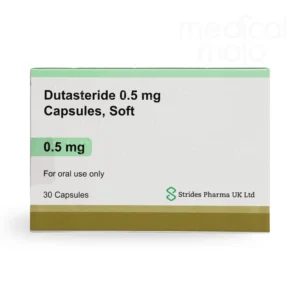
 Dutasteride 0.5mg capsulesPrice range: £22.79 through £81.99
 -
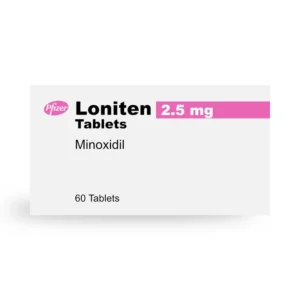
Loniten 2.5mg tablets (Minoxidil 2.5mg tablets)Price range: £39.99 through £99.99
Five key takeaways
- A Two-Pronged Attack: Dutasteride blocks the hair-damaging hormone DHT, while minoxidil stimulates follicles with improved blood flow.
- More Powerful Than Finasteride: Studies show dutasteride is more effective at blocking DHT than finasteride, often leading to better hair regrowth [1].
- Topical Is Often Safer: Applying the treatment directly to the scalp significantly reduces the risk of systemic side effects compared to taking oral pills.
- Compounding Simplifies Treatment: A specialist compounding pharmacy like Medical Mojo can combine both ingredients into a single, easy-to-use topical solution.
- Expert Guidance Is Essential: This is a prescription-only treatment in the UK. A clinical consultation ensures it’s the right and safest option for you.
How this power duo revives your hair
To understand why combining dutasteride and minoxidil is so effective, you need to know about the two main culprits in pattern hair loss. First, a potent hormone called dihydrotestosterone (DHT) shrinks your hair follicles. At the same time, those shrinking follicles are starved of the blood and nutrients they need to grow.
This is where combination therapy shines. It tackles both problems at once to protect existing hair and kickstart new growth.
Dutasteride: The defensive shield
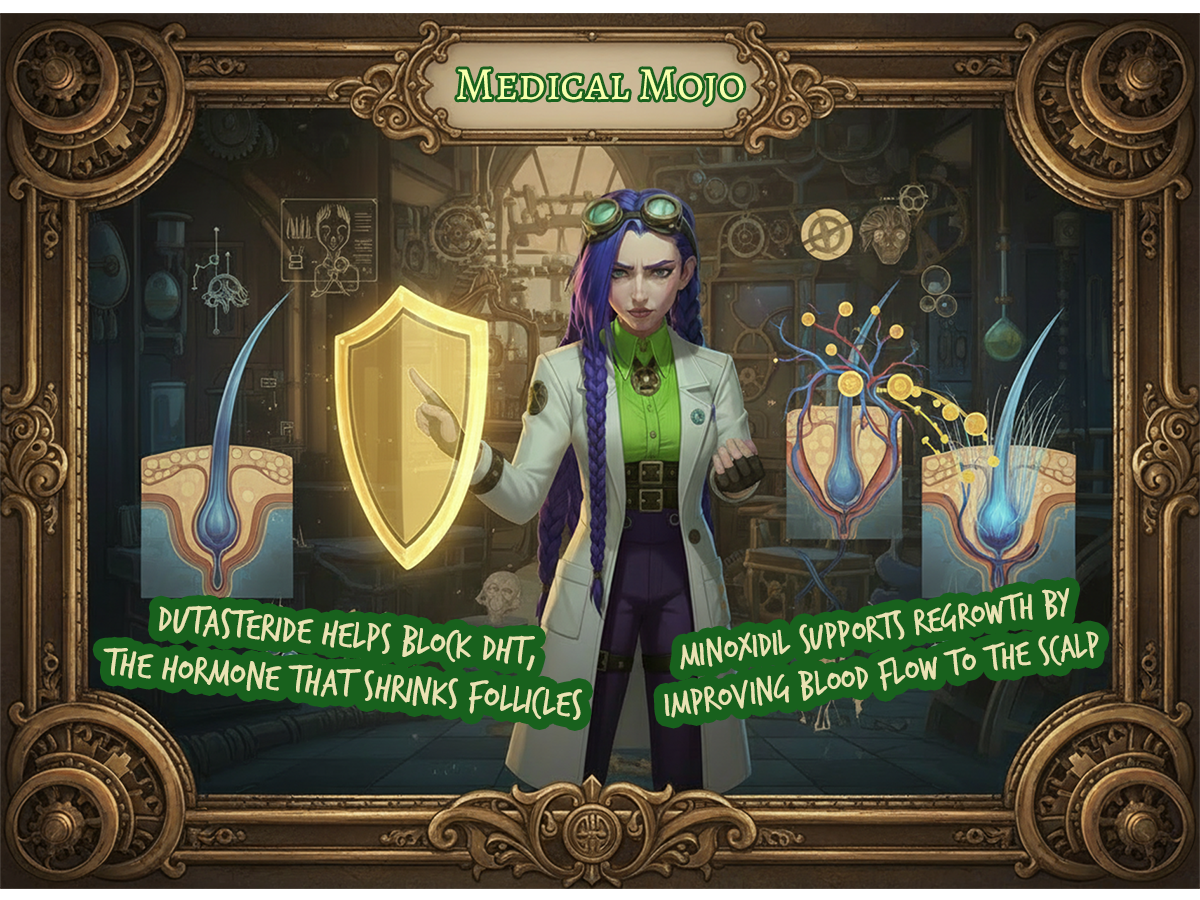
Think of dutasteride as your scalp’s bodyguard. Its main job is to stop the enzyme 5-alpha reductase. This enzyme converts testosterone into the follicle-damaging DHT.
By blocking DHT production, dutasteride puts a protective shield around your hair follicles. This gives them a chance to recover and return to a healthier state. It creates a safe environment for new, stronger hair to grow.
Pharmacist’s tip: Consistency is king with this treatment. You need to apply dutasteride and minoxidil daily as prescribed. Don’t be discouraged if you don’t see changes overnight. Visible results typically take three to six months to appear as your hair cycles need time to respond.
Minoxidil: The growth promoter
While dutasteride plays defence, minoxidil goes on the attack in the best way. Minoxidil is a vasodilator, which means it widens the blood vessels in your scalp. Think of it as a supercharged fertiliser, opening the supply lines to your follicles.
This surge in blood flow delivers a vital rush of oxygen and nutrients. It helps wake up dormant follicles and pushes them back into the active growth phase. We take a closer look at how it works in our detailed guide on what is minoxidil.
Why they work better together
The real magic happens when you pair the defensive action of dutasteride with the growth-promoting power of minoxidil. One stops the damage, while the other actively repairs and stimulates.
- Dutasteride: Protects follicles from DHT, halting the thinning process.
- Minoxidil: Nourishes follicles, encouraging them to produce thicker, stronger hair.
This two-pronged approach is transforming hair restoration. Dutasteride is especially powerful, blocking around 90-95% of scalp DHT compared to finasteride’s 70% [1]. This superior DHT blockade creates the perfect conditions for minoxidil to work its magic, leading to significant, visible regrowth.
Dutasteride vs Minoxidil: A simple comparison
| Feature | Dutasteride | Minoxidil |
| Primary Action | Blocks the DHT hormone that shrinks follicles. | Widens blood vessels to improve nutrient flow. |
| Main Goal | To prevent further hair loss and follicle damage. | To stimulate dormant follicles into a growth phase. |
| Mechanism | 5-alpha reductase inhibitor. | Vasodilator. |
| Analogy | A shield protecting the hair’s root. | A watering can nourishing the scalp’s soil. |
Using both creates the ideal environment for hair to not only survive but truly thrive. It’s a complete strategy that tackles the root causes of hair loss from every angle.
Dutasteride vs finasteride: Which combination is better?
When men research hair loss treatments, finasteride is usually the first name they see. It’s the best-known DHT blocker and is licensed in the UK for male pattern baldness. But is it worth stepping up to the more powerful dutasteride?
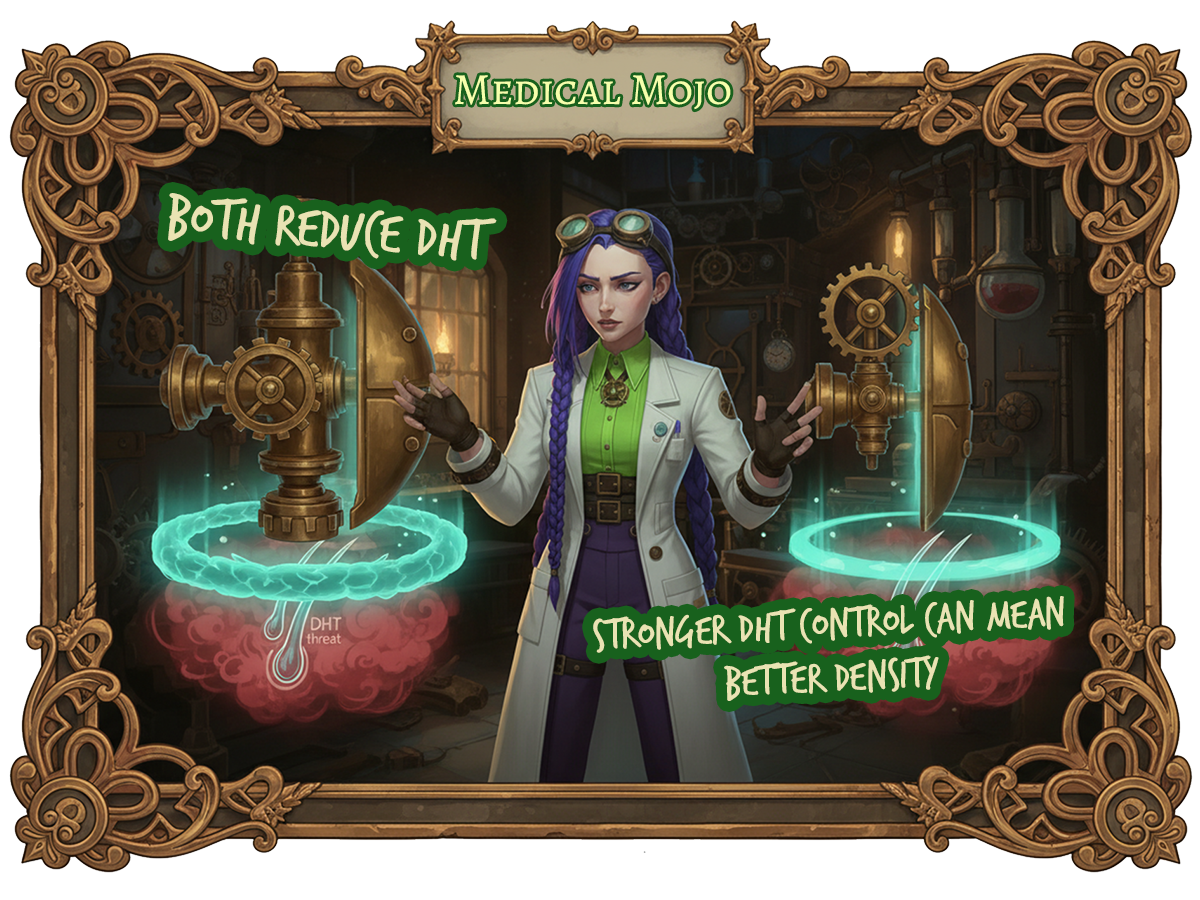
For many men, dutasteride is significantly more effective. Think of it this way: if finasteride is a capable defender, dutasteride is the elite special forces unit. Both belong to a class of drugs called 5-alpha reductase inhibitors, but they are not equal in strength.
Unpacking the difference in power
The main job of these medicines is to block an enzyme called 5-alpha reductase. This enzyme converts testosterone into dihydrotestosterone (DHT), the hormone that attacks hair follicles. But here’s the crucial difference: the enzyme comes in different types.
- Finasteride primarily blocks the Type II version of the enzyme.
- Dutasteride blocks both Type I and Type II versions.
Because of this dual action, dutasteride slashes DHT levels in the bloodstream by over 90%. In comparison, finasteride typically manages a reduction of around 70% [1]. That superior DHT suppression often translates into much better results for hair regrowth.
Pharmacist’s tip: You might hear the term ‘off label’ when discussing dutasteride for hair loss. This simply means a clinician is prescribing a licensed medicine for a purpose it wasn’t originally approved for. It’s a very common, safe, and legal practice in UK medicine when a qualified prescriber believes it’s the best course of action for their patient.
What does the evidence say?
Clinical studies consistently show that dutasteride’s extra power makes a real difference. One major head-to-head study found that men using dutasteride had a higher hair count and less thinning than those on finasteride after just 24 weeks [2].
This suggests that for anyone seeking the most powerful option against hair loss, dutasteride often has a clear edge. It’s an especially good choice for men who have tried finasteride but didn’t see the results they wanted. Switching can often kickstart the regrowth process again. It’s helpful to understand the journey of these treatments; you can get more context by reading about the history of finasteride in our dedicated article.
Real-life example: Switching for better results
Let’s look at a real-world scenario. Alex, a 35-year-old marketing manager, had been on finasteride and minoxidil for two years. His hair loss stopped, but he felt he’d hit a wall and wasn’t seeing any more thickening.
After an online consultation, his clinician suggested switching to a compounded topical solution containing dutasteride and minoxidil. Just six months later, Alex noticed a significant change. The finer hairs at his temples looked thicker, and his crown felt fuller. For him, the extra power of dutasteride was exactly what he needed to push past that frustrating plateau.
Topical vs oral: Why compounded solutions are a game changer
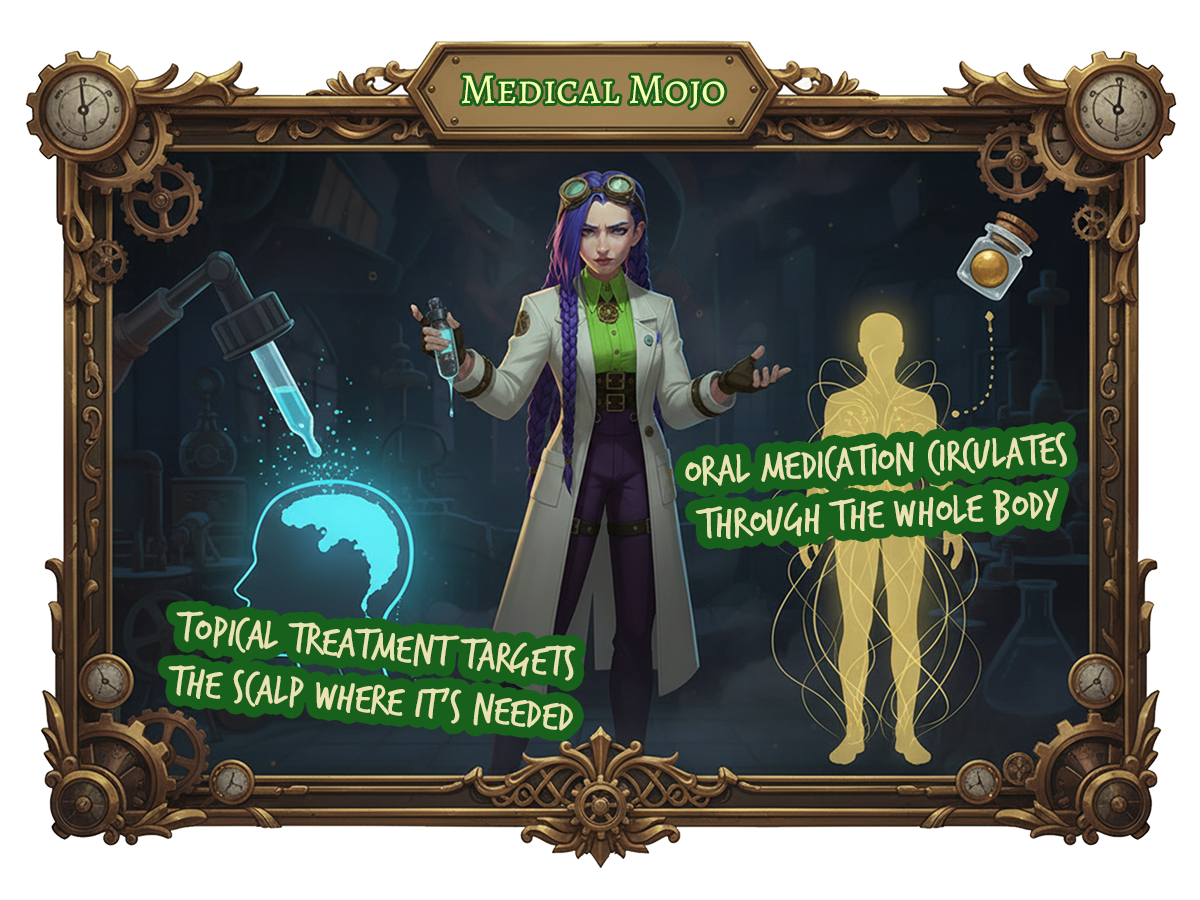
When considering a powerful duo like dutasteride and minoxidil, a key question is how you take it. For years, the standard method was an oral pill. But this sends the medicine throughout your entire body, which isn’t always necessary.
A much more targeted method is now changing hair loss treatment in the UK.
Why topical beats oral for safety and effectiveness
Topical application—putting a liquid or gel straight onto the scalp—delivers the active ingredients precisely where you need them. This focused approach maximises the benefits for your hair while reducing how much medication gets into your bloodstream. By keeping the medicine concentrated on the target, you significantly lower the risk of systemic side effects.
This is a huge leap forward in safety. Research shows topical DHT blockers achieve excellent results with much lower systemic absorption compared to oral versions [3]. You get powerful follicle protection without the same level of risk.
The rise of compounded solutions from Medical Mojo
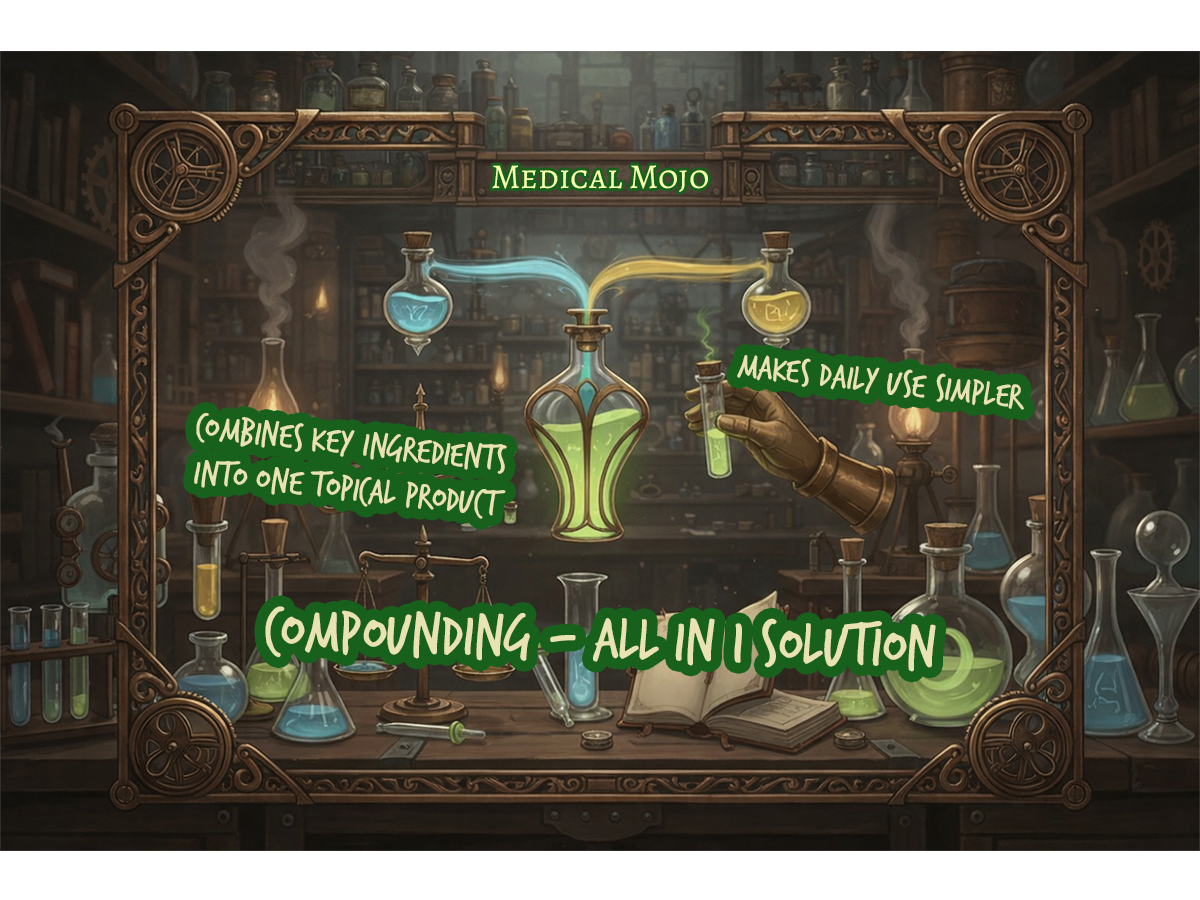
This is where specialist providers like Medical Mojo make a real difference. Instead of juggling two separate products, a compounding pharmacy creates a single, personalised topical formula just for you.
This isn’t just about convenience; it’s about creating a smarter, more effective treatment. By combining dutasteride and minoxidil into one easy-to-use solution, you get a synergistic treatment in every application. This is the ideal choice for a modern, effective approach to hair restoration. You can learn more about how we create these bespoke treatments on our page about UK compounding pharmacy services.
- Simplicity: One application a day, not two separate routines.
- Synergy: Both active ingredients work together at the same time.
- Personalisation: The formula can be fine-tuned to your specific needs.
Real-life example: A gym-goer’s switch
Think about Tom, a 28-year-old personal trainer. He started oral finasteride but noticed a drop in energy and libido, which affected his confidence and gym performance. He was hesitant to try oral dutasteride, fearing worse side effects.
His clinician suggested a compounded topical spray with dutasteride and minoxidil. The light, non-greasy formula absorbed quickly and didn’t interfere with his active lifestyle. Within four months, Tom saw his hairline filling in—without any of the systemic side effects he’d experienced before. The targeted topical approach gave him the results he wanted, safely and conveniently.
Understanding the potential side effects and safety
Starting any new treatment means weighing the benefits against the risks. It’s essential to have an honest conversation about the possible side effects of dutasteride and minoxidil. Most people tolerate the combination very well, especially in modern topical forms.
Knowing what to expect helps you understand what’s normal and when to speak to your clinician. Most side effects are mild and often fade as your body gets used to the treatment.
Common side effects of minoxidil
Minoxidil is generally very well tolerated. As it’s applied directly to your scalp, most side effects are localised.
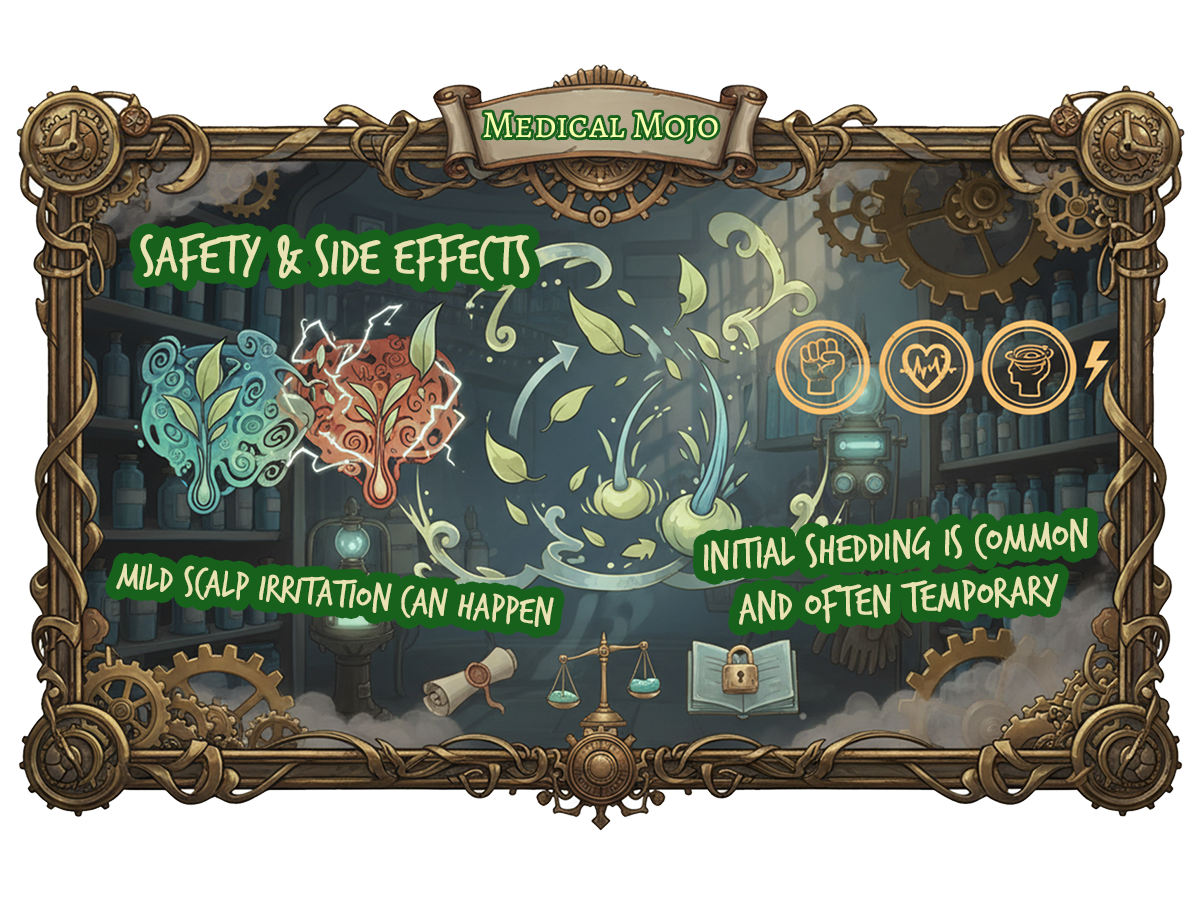
- Scalp irritation: You might notice mild itching, redness, or dryness where you apply the solution. This is often temporary.
- Initial hair shedding: This can be alarming, but it’s a good sign! It means minoxidil is working, pushing out old, weaker hairs to make way for new, stronger ones. This phase usually lasts for a few weeks.
Pharmacist’s tip: To manage scalp dryness from minoxidil, try using a gentle, hydrating shampoo. Avoid products with harsh sulphates. If irritation persists, let your clinician know. They may be able to adjust the base of your compounded formula to suit your skin better.
Understanding dutasteride side effects
Dutasteride’s side effects, especially the sexual ones, are a key concern for some men. It’s crucial to put these risks into perspective, particularly when comparing oral pills to topical solutions. You can explore this topic in more detail in our article that asks, “What is dutasteride?“.
When taken as an oral pill, a small percentage of men (around 2-5%) might experience:
- Decreased libido (sex drive)
- Erectile dysfunction
- Changes in ejaculation
The good news? These side effects are far less likely with a topical solution. By applying dutasteride directly to the scalp, you minimise how much of it enters your bloodstream, which is what causes these system-wide issues. This targeted approach is a major safety advantage.
When to seek urgent help
Serious side effects are rare, but you should always be cautious. Stop the treatment and contact your doctor or NHS 111 immediately if you experience any of the following:
- Signs of an allergic reaction: Swelling of the face, lips, or tongue, a rash, hives, or difficulty breathing.
- Chest pain or a rapid heartbeat.
- Feeling dizzy, lightheaded, or fainting.
- Sudden, unexplained weight gain.
Important safety information
This combination treatment isn’t suitable for everyone. It is vital to know the following warnings:
- Women and Pregnancy: Dutasteride can cause serious birth defects. Women who are pregnant, planning a pregnancy, or breastfeeding must not use or handle dutasteride. The active ingredient can be absorbed through the skin.
- Prostate Cancer: Dutasteride can affect a blood test called PSA, which screens for prostate cancer. Always tell your doctor you are using dutasteride before any tests.
- Liver Problems: If you have a history of liver disease, discuss this with your clinician before starting treatment.
Summary
Combining dutasteride and minoxidil is a powerful and effective strategy for fighting male pattern baldness. Dutasteride provides a stronger defence against the hormone DHT than finasteride, halting hair loss more effectively. Minoxidil works alongside it, stimulating new growth by increasing blood flow to the scalp. Using these two together in a custom-compounded topical solution offers the best of both worlds: maximum impact on your hair with a minimal risk of side effects. This modern, targeted approach makes treatment simpler, safer, and more convenient than ever.
Frequently asked questions
How long until I see results?
Patience is key. Most people see the first real signs of improvement within three to six months of consistent, daily use. The treatment first stops further thinning before pushing follicles into a new growth phase. The most significant results are often visible after about a year of continued use.
Can women use this combination?
No, this specific combination is not suitable for women, especially if there’s any chance of pregnancy. Dutasteride can cause serious birth defects in a developing male foetus and can be absorbed through the skin. Women should not use or handle the medication. A clinician can discuss other effective hair loss treatments designed for women.
What happens if I stop using it?
Dutasteride and minoxidil actively manage your hair loss. If you stop the treatment, the underlying cause of hair loss will resume. Any hair you have regrown or maintained will likely be lost over the next three to six months. To keep your results, you must view this as a long-term commitment.
Is the initial hair shedding normal?
Yes, an initial shedding phase is completely normal and a good sign. This usually happens in the first few months as minoxidil starts working. It pushes follicles into a new, healthier growth cycle, shedding older, weaker hairs to make room for stronger ones. It’s a temporary phase that shows the treatment is working.
Do I need a prescription in the UK?
Yes, you need a prescription for any treatment containing dutasteride in the UK. While you can buy minoxidil over the counter, dutasteride is a potent medicine prescribed ‘off label’ for hair loss. A qualified UK clinician must conduct a full health assessment to ensure the dutasteride and minoxidil combination is safe and appropriate for you.
Is dutasteride and minoxidil better than finasteride and minoxidil?
For many men, yes. Dutasteride is clinically proven to be more effective at blocking DHT than finasteride, which can lead to better hair regrowth and density. It is often recommended for men who did not get the desired results from finasteride or for those with more advanced hair loss seeking the most powerful treatment available.
How this content was created:
This article was written and fact-checked by qualified medical professionals using trusted, evidence-based sources. We consult guidelines from the NHS, NICE, and the MHRA, alongside peer-reviewed clinical studies, to ensure our content is accurate, up-to-date, and patient-focused.
Disclaimer: This article is for informational purposes only and is not a substitute for professional medical advice.
References
[1] Clark, R.V., Hermann, D.J., Cunningham, G.R., Wilson, T.H. and Morrill, S.L. (2004). Available at: Marked Suppression of Dihydrotestosterone in Men with Benign Prostatic Hyperplasia by Dutasteride, a Dual 5?-Reductase Inhibitor | The Journal of Clinical Endocrinology & Metabolism | Oxford Academic
[2] Zhougbao Zao et al ( 2019) Available at: The efficacy and safety of dutasteride compared with finasteride in treating men with androgenetic alopecia: a systematic review and meta-analysis – PMC